Research peptides
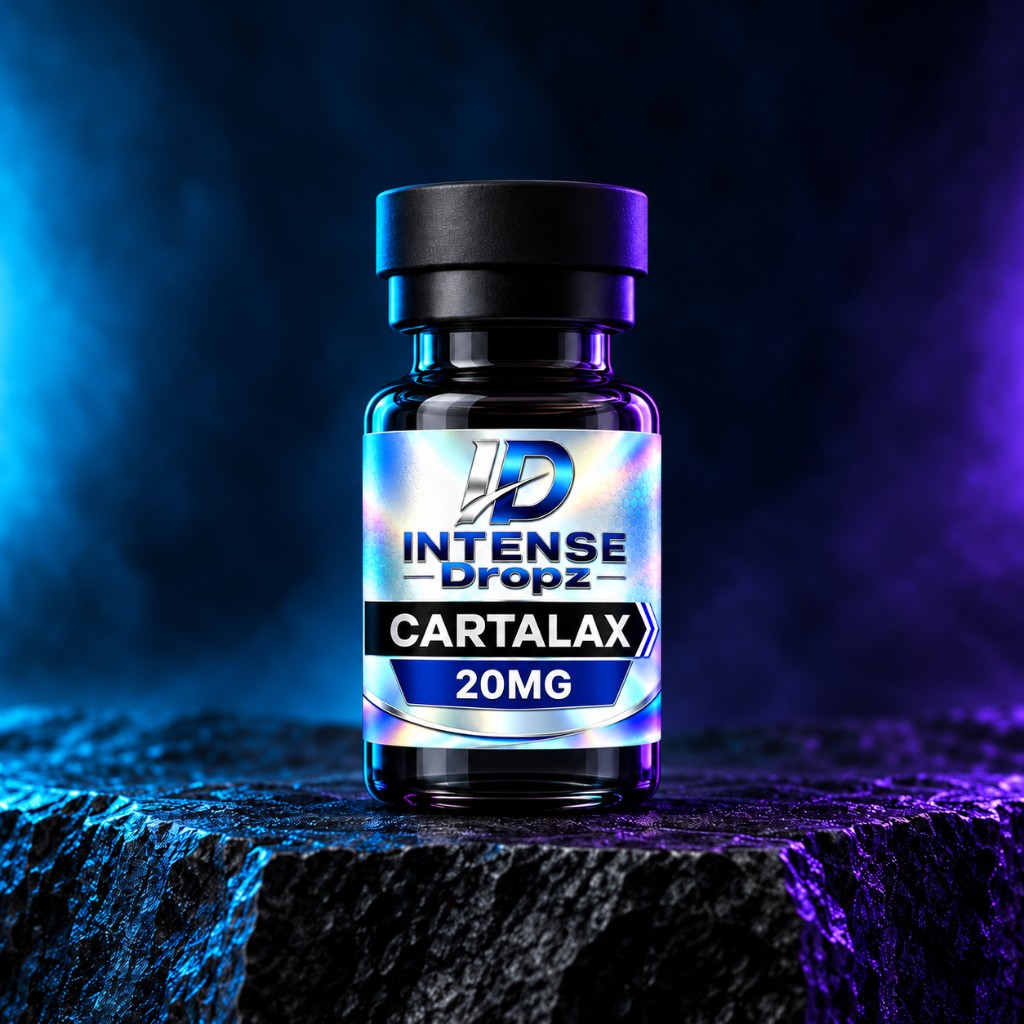
Cartalax 20mg
Price (CAD)
Availability: 100 in stock
Description / research purpose
Cartalax — 20 mg
Cartalax, also known as Ala‑Glu‑Asp (AED), is a synthetic tripeptide composed of alanine, glutamic acid and aspartic acid. It belongs to a group of very short compounds known as peptide bioregulators.
Cartalax is primarily studied for its potential influence on cartilage, connective tissue and age-related cellular processes. Rather than acting as a structural component of cartilage itself, researchers are investigating whether AED can influence the signals that regulate how connective-tissue cells function, reproduce and maintain their surrounding extracellular matrix.
What is Cartalax being studied for? Laboratory research has examined Cartalax in connection with:
Cartilage-cell development: AED is being investigated for its potential role in the differentiation of mesenchymal stem cells into chondrocytes—the specialized cells responsible for producing and maintaining cartilage.
Cellular renewal: Studies have reported changes in Ki‑67 and CD98hc, proteins associated with cellular proliferation, nutrient transport and tissue-renewal processes.
Extracellular-matrix regulation: Cartalax has been studied for its influence on MMP‑9, an enzyme involved in breaking down and remodelling collagen and other extracellular-matrix components.
Programmed cell death: Researchers have observed effects involving caspase‑3, a protein associated with apoptosis, or the natural process through which damaged and aging cells are removed.
Gene-expression pathways: AED has been examined for its influence on genes associated with cellular aging, growth signalling and connective-tissue function, including IGF‑1, NF‑κB and TNKS2.
Together, these findings have made Cartalax an area of interest in laboratory research involving cartilage biology, connective-tissue aging, extracellular-matrix maintenance and cellular regeneration. These effects have mainly been observed in cell-culture and preclinical models and do not establish that Cartalax rebuilds cartilage, relieves joint pain or treats arthritis in humans.
Product details Compound: Cartalax Sequence: Ala‑Glu‑Asp Abbreviation: AED Classification: Short peptide bioregulator Format: Lyophilized powder Vial content: 20 mg Research Use Only: Intended exclusively for laboratory and analytical research. Not for human consumption, veterinary use, diagnosis or treatment. Cartalax is not an approved treatment for arthritis, joint pain or cartilage damage.
Educational purpose only
Reconstitution steps
Remove the vial from refrigerator storage and allow to equilibrate at room temperature for 30 or more minutes.
Remove protective plastic cap; wipe top of peptide and bacteriostatic water with alcohol to disinfect.
Draw 3.0 mL bacteriostatic water with a sterile syringe. All our vials are vacuum sealed, so when inserting syringe to add bacteriostatic water hold plunger so it does not shoot the water into the peptide or vial.
Inject very slowly down the inside vial wall; avoid foaming.
Gently swirl/roll until dissolved—solution should be clear (do not shake).
Refrigerate at 2–8 °C (35.6–46.4 °F).
Standard / gradual approach
Frequency: Subcutaneous, once daily.
Cycle length: 8–12 weeks; optional extension to 16 weeks, with 4 weeks off.
Weeks 1–2: 2,000 mcg (2.0 mg) daily — 30 units (0.30 mL). Weeks 3–4: 3,000 mcg (3.0 mg) daily — 45 units (0.45 mL). Weeks 5–8: 4,000 mcg (4.0 mg) daily — 60 units (0.60 mL). Weeks 9–12: 5,000 mcg (5.0 mg) daily — 75 units (0.75 mL).
From a research-protocol standpoint, morning or evening is reasonable; consistency day to day matters more than clock time.
How this works
Cartalax (Ala-Glu-Asp) is among the Khavinson bioregulatory peptides—ultrashort peptides studied for interactions with gene expression at nanomolar concentrations. The sequence corresponds to a motif in type XI collagen, important for cartilage integrity.
Potential benefits and limitations
Preclinical literature describes fibroblast proliferation support, extracellular matrix homeostasis, and general tolerability in observational settings; mild injection-site reactions may occur.
Limitations: No large-scale human RCTs; most data derive from in vitro or rodent models.
This guide is for educational purposes only and is not medical advice. For research use only. Not for human consumption.
For in vitro laboratory research only. Not for human or veterinary use. Reconstitution notes are reference only—not dosing instructions.